Do all for safety, for a safe world!
Tel:+86-0790-6000119 | E-mail: info@aerosolfire.com


Electric Ignitor – An Activator for Electrical Aerosol Generators
April 20, 2025
Concept and Description of Electric Ignitor
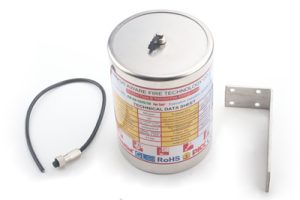
The electric ignitor is also named “electric match” or “electric ignition head”, is a device that uses electrical energy to stimulate the production of a flame or high temperature, which in turn ignites other substances. The core principle is that an electric current heats a resistance wire or triggers a chemical reaction that generates enough heat to achieve ignition.
It is used in many special fields and special areas. In the following sections we will list its specific applications.
Because it contains content of gunpowder, only military or pyrotechnic companies are qualified to produce it.

Basic Composition
Its structure consists mainly of the following basic elements:
- Resistance Wire/Bridge Wire: The resistance wire heats up as current passes through it and the temperature rises to the ignition point.
- Ignition agent: Encapsulated around a resistance wire that burns quickly when heated (e.g. nitrocellulose, lead phenate, etc.).
- Electrode pin: connects power and conducts current.
- Housing/Case: usually metal or plastic. Serves to provide protection and sealing. The housing material of fire electric igniters is generally plastic.
Working Principle
Its basic working principle as following steps:
- When a current is obtained, the resistance wire heats up rapidly (Joule heating effect) and ignites the surrounding agent.
- The burning of the agent produces a high-temperature flame or spark that ignites the main charge (e.g., propellant, explosives, gunpowder, fire extinguishing agent etc.).
Main Features
Electric ignition heads (Electric ignitors) are a special product and are classified as 1.4s. in the Dangerous Goods Classification.
It contains the following features:
- Quick Response. It enables millisecond ignition.
- Precise control. It can be triggered remotely by an electrical signal. Activation of other devices is very precise.
- Security. It requires specific current and voltage excitation to avoid false activation.
- Wide range of application areas. It is used in almost every industry.
- Compact size and light weight.
- Versatility and customisation. It can be adapted to different energy requirements.
Areas of Application
The electric ignition head contains gunpowder components, so it is a specially regulated product all over the world. It is also specialised in the following main areas of application:
- Applications in the military industry. Includes propellant ignition for missiles, artillery shells, rockets and more.
- Aerospace Industry. It can be used for solid rocket motors, ignition of separation devices.
- Civil Engineering. Such as: Demolition engineering, car airbags (some models).
- Industrial Field. It can be used for gas turbine start-up, as well as boiler ignition.
- Firefighting industry fire suppression (special areas). Mainly used for extinguishing bombs and fire-fighting systems, such as the start-up of aerosol fire-fighting systems, the start-up of ultra-fine dry powder gas-producing agents, and so on.
- Scientific experiments. High-speed photography, explosion mechanics research, as a controlled trigger source.
- Fireworks, and special effects for film and television. We can electronically control the fireworks displays to synchronise the launching of the fireworks.
Classification of Electric Ignitor
It has the following classifications:
- Scorched Bridge Wire Style. This is dependent on resistance wire heating (most common).
- semiconductor bridge wire(SCB). It utilises microelectronic technology for lower power consumption.
- Artemisia exploded bridge wire(EBW). The high voltage penetrates the bridge filament and generates a plasma that ignites the object.
The above are the three main classification styles, each of which has advantages and disadvantages. In the following chapters, we will discuss them specifically.
Security Consideration
Since electric ignition heads are special products, we need to consider their safety and take the necessary measures:
- Need to be anti-static, anti-electronic interference (e.g. short-circuit protection).
- During transport and storage, we need to set it to a short-circuit state (pin shorting).
- Avoid lightning, ice and heat.
- The storage, transport and use of hazardous and explosive substances must be in accordance with the relevant regulations on the safe management of hazardous and explosive substances.
Transport and Storage Precautions
During storage and transport, we should take the following protective measures and precautions for the electric igniton head:
- Store at room temperature. Typical storage temperature is 5℃ to +32℃.
- Keep the room humidity at 60 to 75.
- Store in a dry, ventilated place, protected from sunlight and rain.
- Prevent it from being used in special rooms, such as hazardous materials rooms, and keep it out of the reach of children.
- Put up the Dangerous Goods sign on the product.
- Use of specialised dangerous goods vehicles for transport.
- Avoid severe vibration of the vehicle during transport.
- Implementation of the registration of products in and out of the warehouse.
Precautions for Use
When we use or operate it, we should pay attention to the following matters:
- Handle with care and wear protective gloves.
- Remove static electricity when working, wear anti-static clothing and anti-static gloves.
- Check the operation instruction of Electric Igniter.
- Operators need to be professionally trained and familiar with the operating (installation) processes and procedures.
- Smoking is prohibited during operation and installation, and anti-static measures are required.
- Do not switch on the electric ignition prematurely or suddenly and prohibit electric ignition in the presence of persons.
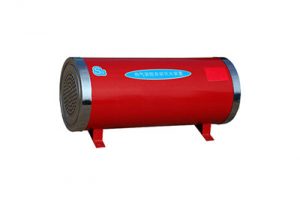
Relevance of Electric ignitor and Aerosol Generator
Due to the popularity of aerosol generators, electronic ignition heads have been used in a large number of aerosol ignition operations.
The electronic ignition head is the catalyst that activates the spraying of the aerosol fire extinguishing agent. It is one of the main tools for activating the extinguishing agent to extinguish a fire.
The world’s leading brands of aerosol fire extinguishers use electronic ignition heads as the primary method of activation.
All models of aerosol fire extinguishers produced by our company are equipped with electronic electric heads. The activation elements of our products are: electronic match activation, thermal wire activation and glass bulb activation.
Electric ignition head manufacturers are generally military factories, so the quality of the product is guaranteed, so generally do not have to worry about the quality of the electronic ignition head.
The electronic ignition heads used in our fire suppression systems undergo a rigorous manufacturing process and are excellent quality ignition devices that can be used with confidence.
The Electric Ignitor is an goos activator for our electrical aerosol generators.
If you have any needs, you can contact us in time.

Blog
Maybe you like also
Copy©2025 Jiangxi Aware Fire Technology Co.,Ltd all right reserved